
“Strengthening Indigenous participation in both public and private procurement is essential to accelerating reconciliation.” -– Ontario Chamber of Commerce & Canadian Council for Indigenous Business report
June marks National Indigenous History Month in Canada. This is a time to recognize the rich cultures, contributions, and resilience of First Nations, Inuit, and Métis Peoples. It’s also an opportunity for reflection and renewal within Canada’s reconciliation journey.
Each year, thousands of Canadian organizations open meetings with land acknowledgments and publish reconciliation statements. Yet many are asking the same important question: what comes next?
At Staff Shop, we believe reconciliation must be reflected not only in our words but in our hiring, procurement, and long-term economic partnerships. Our commitment centres on supporting Indigenous inclusion through authentic hiring and procurement practices that drive measurable change.
The Current Landscape
In today’s market, we continue to see persistent labour market gaps for Indigenous Peoples in Canada. The National Indigenous Economic Progress Report found that Indigenous employment rates remain below those of non-Indigenous Canadians, underscoring that economic inclusion still has room to grow.
Meanwhile, the Canadian Council for Indigenous Business (CCIB) reports that Indigenous-owned businesses contribute over $50 billion annually to Canada’s economy and that number is climbing! This growth is part of a broader demographic shift: Indigenous Peoples are the fastest-growing population in Canada, and Indigenous youth are entering the workforce in record numbers, forming one of the fastest-growing segments of the country’s labour market. This is an amazing feat, as Indigenous Canadians make up just 5% of the overall population currently.
This trend is promising, but economic inclusion must go beyond participation. Equity means empowering Indigenous professionals and entrepreneurs with the same opportunities and access to capital, mentorship, and decision-making influence as others.

What “Action” Looks Like in Hiring
For employers ready to move from performative to transformative inclusion, here are practical starting points:
- Prioritize a “hand-up, not a hand-out” approach by creating systemic, sustainable opportunities that empower long-term professional growth and self-determination for Indigenous Canadians.
- Build recruitment pathways through Indigenous employment networks such as Indigenous Works, local Friendship Centres, or job training partnerships.
- Involve Indigenous advisors or consultants in HR planning and leadership coaching to ensure strategies reflect authentic perspectives.
- Review job posting language to remove barriers and incorporate culturally sensitive, inclusive phrasing.
- Expand cultural safety training beyond HR. Make it part of onboarding, leadership development, and team building.
- Remove practical barriers to employment by offering supports such as transportation to and from work, internet access, remote opportunities, and training programs for entry-level roles.

Tip: A Canadian employer looking to strengthen Indigenous inclusion could partner with organizations like Anishinabek Employment and Training Services (AETS) to co-create apprenticeship pathways, expand outreach to Indigenous candidates, and build mentorship supports that help new hires succeed. Over time, this kind of collaboration can improve access to skilled trades, strengthen retention, and create more culturally responsive workplaces.
Procurement with Purpose
True inclusion also means supporting Indigenous suppliers. Indigenous procurement involves sourcing goods and services from Indigenous-owned businesses as a deliberate way to redistribute economic opportunity.
Business owners can begin by:
- Auditing vendor lists to identify existing or potential Indigenous partners.
- Setting measurable procurement goals, such as 10% of annual spending with Indigenous suppliers.
- Partnering with certified programs like CAMSC (Canadian Aboriginal and Minority Supplier Council) or CCAB’s Supply Change initiative to access vetted supplier networks.
- Creating mentorships or joint ventures that foster Indigenous entrepreneurship while deepening relationships.
- Support organizations, such as the Indigenous Prosperity Foundation, and Their Opportunity, which empowers youth through sport. They host an Indigenous Youth Hockey Equipment Drive.
Procurement with purpose isn’t charity, it’s strategy. Indigenous businesses bring unique value, incredible innovation, and community-driven accountability that strengthen supply chains and corporate culture alike.
Staff Shop’s Journey
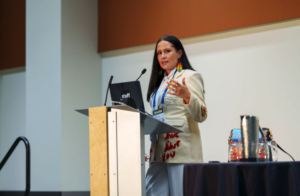
At Staff Shop, inclusion is woven into both our operations and our partnerships. We’re proud to collaborate with diverse suppliers and support Indigenous talent pipelines wherever possible.
As our CEO, Jennifer Ménard-Shand, has shared, “For us, inclusion isn’t a checkbox — it’s how we build strong, sustainable communities. We believe business can be the bridge between words and measurable reconciliation.”
Through initiatives that prioritize equitable hiring, supplier diversity, and community entrepreneurship, Staff Shop continues advancing reconciliation in the workplace not just in June or September, but every day.
Talk to Us
This National Indigenous History Month, let’s move beyond acknowledgment toward meaningful action. Whether you’re hiring, contracting, or collaborating, every choice matters in building economic inclusion that lasts year-round.
Want to start your journey? Explore these trusted resources:
- Canadian Council for Indigenous Business (CCIB)
- Indigenous Works
- Reconciliation Canada
- Procurement Assistance Canada
- Victim Services Toronto
- Native Women’s Association of Canada (NWAC)
You can also hire Staff Shop Founder & CEO, Jennifer, First Nations Ojibwe and French-Canadian wife, mother, entrepreneur and speaker for your next event or conference on this topic. Let her story be an inspiration for how Canadian businesses can function when it comes to reconciliation. www.staffshop.ca / www.fireflames.ca
“Employers can promote reconciliation by establishing culturally safe workplaces that recognize and accommodate the diverse and unique needs and backgrounds of Indigenous employees.” -– Canadian Chamber of Commerce, Inclusive Growth Dialogue on Economic Reconciliation and Indigenous Entrepreneurship